

Rodent Control for Hog Buildings in Calhoun County
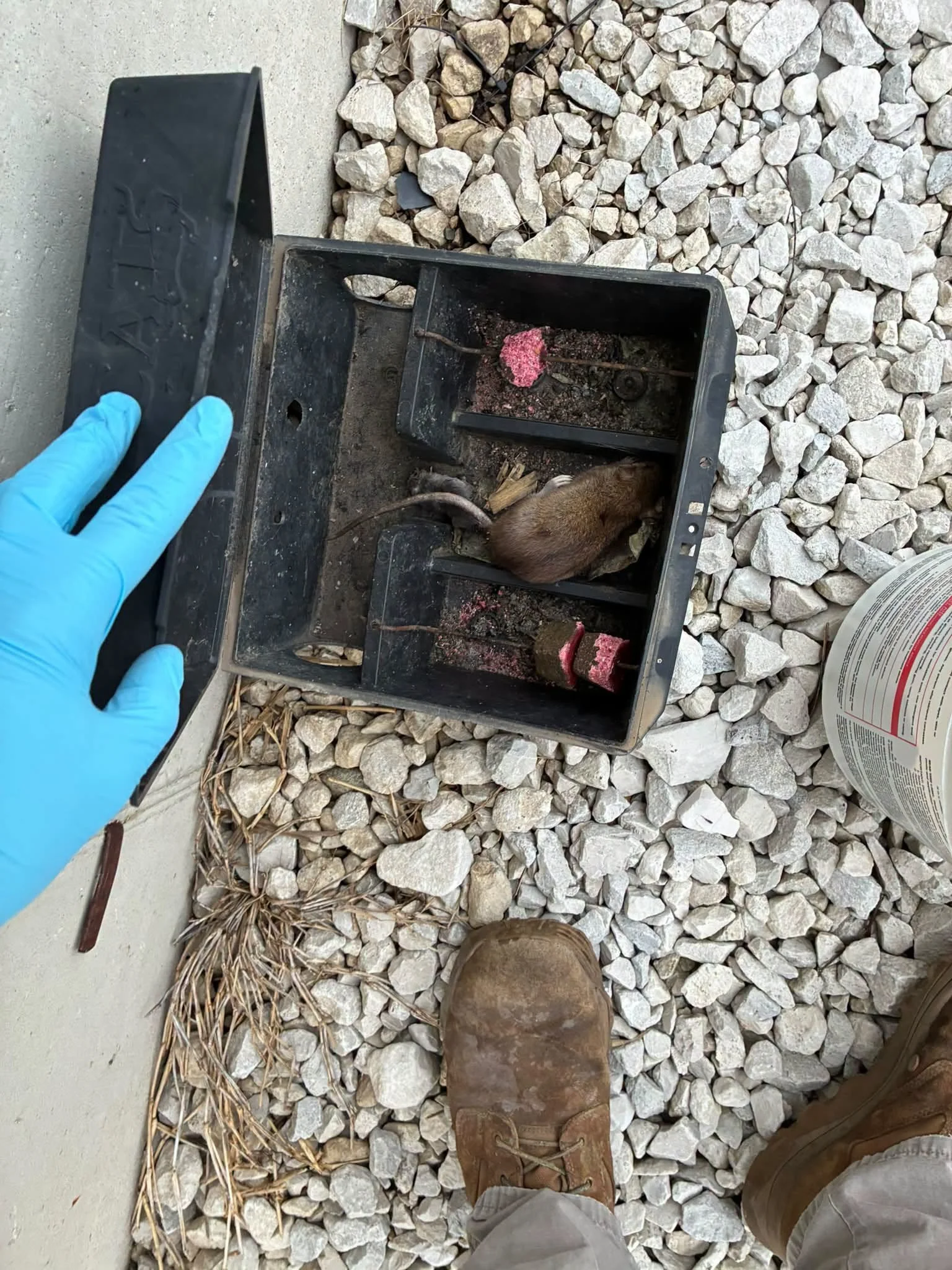
Fall harvest sends mice and rats looking for warmth and feed. Here’s how Calhoun County hog producers can protect buildings, feed, and herd health.
Every October, the same thing happens around Calhoun County. The combines roll, the fields get cut down, and the mice and rats that spent the summer in the beans and corn suddenly have nowhere to live. A warm, dry hog building with feed on site looks like the best deal in the county.
If you raise hogs, you’ve probably already seen the first signs: droppings along feed lines, a gnawed bag, fresh burrows along the foundation. That’s your window to get ahead of it, because rodent pressure in a swine facility only gets worse once the weather turns.
Why rodents in a hog building cost more than you think
Feed loss is the obvious one. A mouse eats little, but it contaminates far more than it eats, and a rat does the same on a bigger scale. Spoiled feed is money you’re hauling and paying for twice.
The less obvious costs add up too. Rodents chew insulation and wiring, which is a real fire risk in a building full of heaters, fans, and controllers. They also carry diseases that matter to a herd, including Salmonella and Leptospirosis, and they move between buildings and sites without any regard for your biosecurity plan. If you’ve worked hard to keep a clean herd, a rodent problem is one of the easiest ways to undo it.
If you’re not sure what’s already living in your buildings,
Where they get in
Mice can squeeze through a gap about a quarter inch wide, roughly the size of a pencil. Rats need about half an inch. In older buildings, that’s a lot of places: gaps around curtain machines, worn door sweeps, utility penetrations, cracked concrete at the base of walls, and the spots where pit fans meet the structure.
Walk the outside of each barn in daylight and look low. Rats leave greasy rub marks along walls and pipes where they travel the same route every night, and active burrows are usually packed smooth and clean, not overgrown.
Inside, check feed rooms, storage areas, and the space around feed lines first. Rodents go where food and shelter overlap.
Sanitation and exclusion come first
Bait alone doesn’t solve a rodent problem. If food and cover are still available, new rodents keep showing up as fast as you remove the old ones.
A few habits make the biggest difference:
Keep spilled feed cleaned up promptly, especially around bins and augers.
Store bagged feed and supplements off the floor, away from walls, in sealed containers.
Keep a clear strip, ideally a few feet of gravel or bare ground, around the outside of buildings so there’s nowhere to hide.
Cut back weeds and move equipment piles, old pallets, and stacked materials away from the foundation.
Seal gaps with materials rodents can’t chew through, like steel wool packed with sealant, metal flashing, or concrete patch. Foam and plastic alone won’t hold.
If you’ve got a long list of repair spots and not enough hours in the day,
Baiting and trapping in a livestock setting
This is where hog buildings are different from a typical commercial property. Bait has to be placed where rodents will find it and pigs, pets, and wildlife can’t. That means tamper-resistant bait stations, placed along walls and runways, and checked on a regular schedule so you know what’s being taken.
Resistance is also a real issue in some rodent populations, so a product that worked five years ago may not work as well now. A good program rotates materials, watches consumption, and adjusts when the numbers don’t drop. Snap traps and monitoring stations are useful inside buildings where you want to track activity without putting out more bait than you need.
A licensed technician is worth having involved here. Rodenticide labels carry specific rules about placement and use around livestock, and getting it wrong can mean problems for animals or for your operation.
Make it a routine, not an emergency
The producers who have the fewest problems aren’t the ones who react fastest. They’re the ones who check on a schedule. A simple monthly walk-through, a log of where you find activity, and a fall and spring tune-up goes a long way toward keeping numbers low.
Fall is the best time to start. Rodents are looking for a way in right now, and every gap sealed before the first hard freeze is one less place for them to settle for the winter.
If you want a second set of eyes on your barns before the cold hits, call Evicted Pest Control at 712-297-4711 or send us a message to set up a visit in Calhoun County.
