

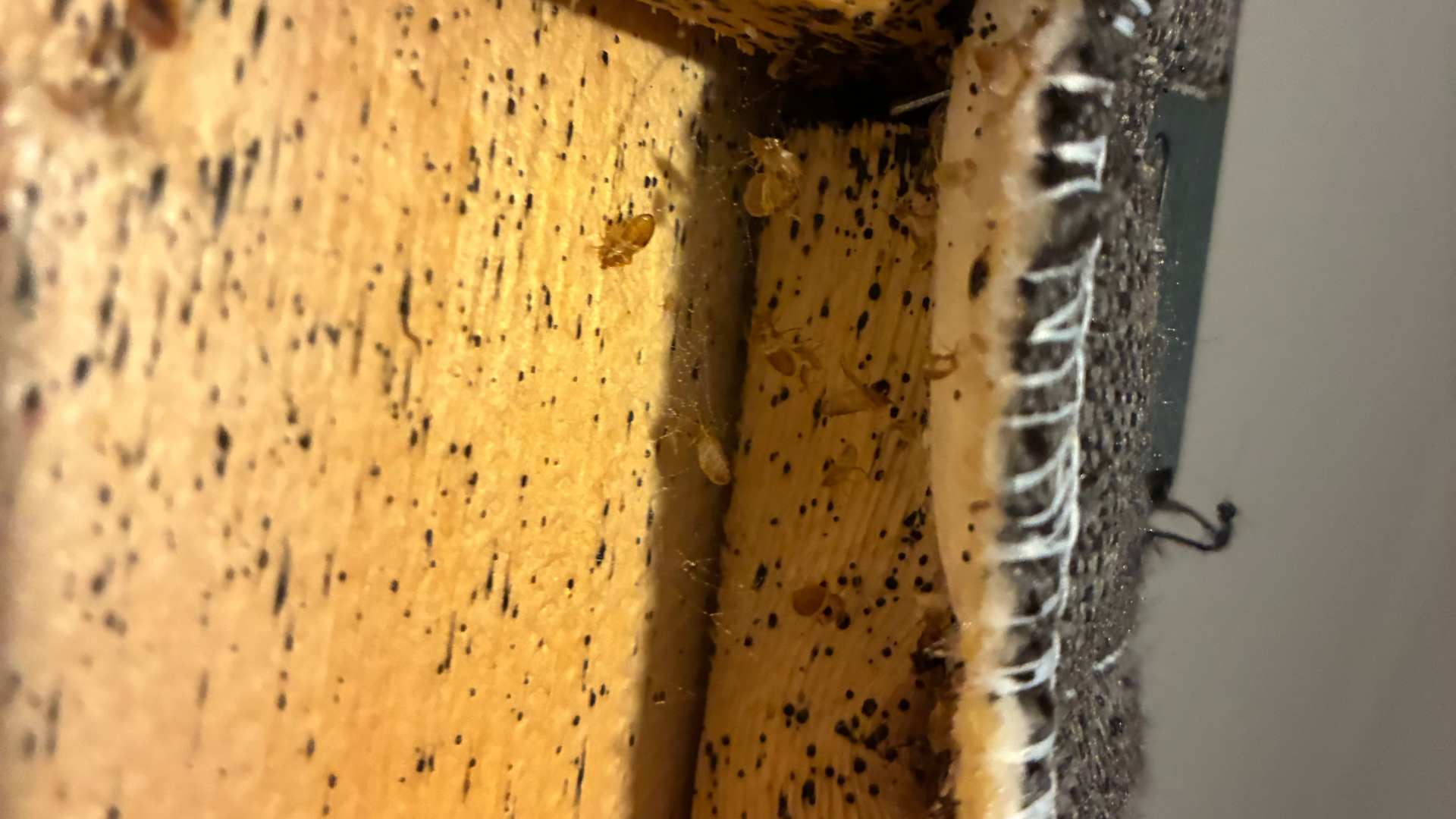
If you’ve ever laid awake wondering whether that itchy spot is a mosquito bite or something worse, you’re not alone. Bed bugs have a reputation for being mysterious, and honestly, a lot of that comes from not knowing how they behave. Once you understand how they live, they get a lot easier to spot and a lot easier to stop.
What they actually are
Adult bed bugs are small, flat, reddish-brown insects about the size of an apple seed. They don’t fly or jump. They crawl, and they’re surprisingly quick about it. After feeding, they swell up and turn a deeper red, which is when people most often notice them.
They’re not a sign of a dirty home. Bed bugs want one thing, a warm body to feed on, and they’re just as happy in a spotless hotel room or a tidy farmhouse as anywhere else.
The life cycle, start to finish
A female lays one to five eggs a day, and over her lifetime that can add up to a few hundred. The eggs are about the size of a pinhead, pale, and stuck to rough surfaces like mattress seams, wood, or fabric folds. They hatch in about a week or two.
What hatches is a nymph, a smaller, nearly translucent version of the adult. Nymphs go through five stages, and they need a blood meal before each molt to move to the next one. Depending on temperature and how easily they can feed, going from egg to adult takes anywhere from about five weeks to a few months.
Adults can live six months to a year, and they’re tougher than you’d expect. A bed bug that can’t find a meal can go for months without feeding, which is why an empty room isn’t necessarily a bed-bug-free room. (If you’re dealing with a place that’s been vacant and suspect they’re still hanging around, give us a call and we’ll take a look.)
When and how they feed
Bed bugs are most active in the dead of night, usually in the hours before dawn when you’re in your deepest sleep. They find you by your body heat and the carbon dioxide you breathe out. A feeding takes five to ten minutes, and the bite itself is painless because their saliva includes a mild numbing agent. That’s why most people don’t wake up.
Reactions vary a lot. Some people develop red, itchy welts within a day, and some don’t react at all, which is one reason an infestation can go unnoticed for weeks. Bites often show up in a line or cluster, but that pattern alone can’t confirm bed bugs, since plenty of other things cause similar marks. The good news is that bed bugs aren’t known to spread disease.
Where they hide
During the day they tuck into tight cracks and crevices, usually within about eight feet of where you sleep. Think mattress seams, box springs, bed frames, headboards, nightstands, and the gaps behind baseboards or outlet covers. As numbers grow, they spread to couches, recliners, and other nearby furniture.
How they spread
Since they can’t fly, bed bugs get around by hitchhiking. They climb into luggage, backpacks, used furniture, clothing, and bedding, then ride along to a new home. This is why travel, secondhand shopping, college move-ins, and shared walls in apartments are common ways they show up. In a small town or a rural area, a single used couch or one suitcase from a trip can be all it takes.
Signs to watch for
Small rust-colored or dark spots on sheets and mattresses (from crushed bugs or their droppings)
Tiny pale shed skins left behind as nymphs molt
Live bugs along mattress seams and bed frames
A faint, musty, sweet odor in heavier infestations
Unexplained bites that keep appearing
If you’re seeing more than one of these, don’t wait it out. Early infestations are far easier and cheaper to treat than established ones.
Why DIY often falls short
Because eggs are tough to reach and adults hide so well, store-bought sprays tend to kill the bugs they touch while missing the rest. Worse, some treatments can scatter bed bugs into other rooms, turning one problem area into several. Throwing out a mattress rarely solves it either, since they’re likely living elsewhere in the room too.
A professional treatment targets every stage of the life cycle and checks the hiding spots you’d never think to look. If you suspect bed bugs, reach out to Evicted Pest Control and we’ll get you sleeping easy again.
